



ELEGANCE Exhibition – Jan Rapin & Sculptors
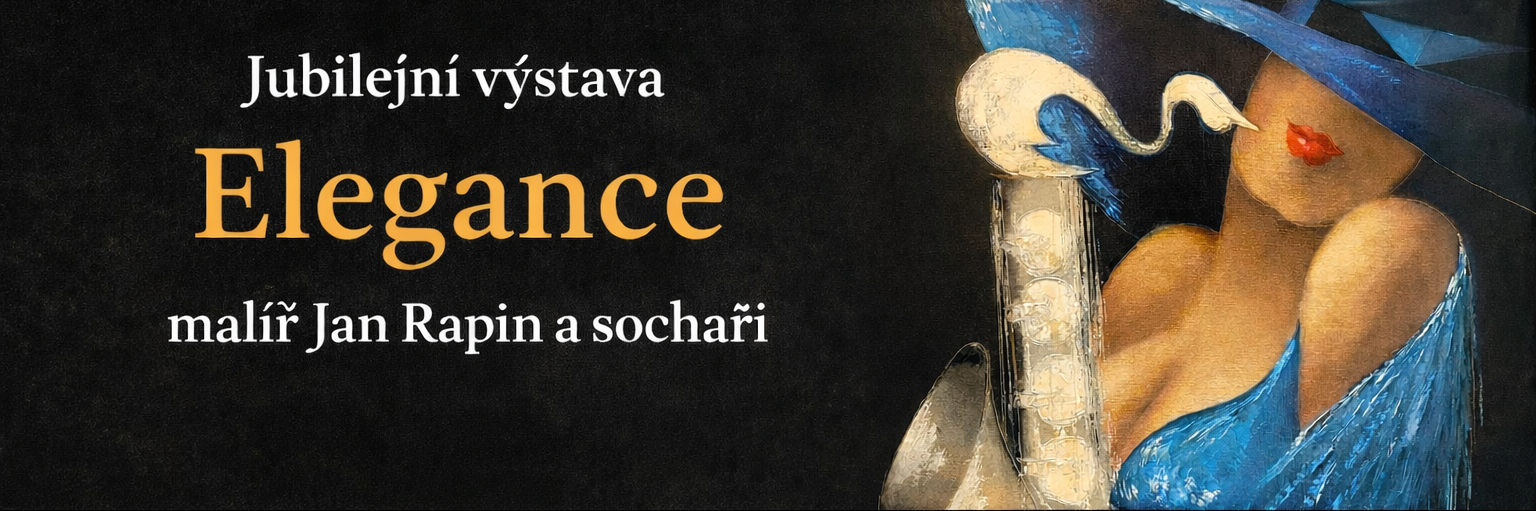
The jubilee exhibition ELEGANCE, organized by SOCHÁRIUM Gallery on the occasion of painter Jan Rapin's 70th birthday, presented the most comprehensive survey of his work to date at Prague's New Town Hall, featuring more than 100 artworks.
The project offered a representative selection spanning the artist's entire creative career and provided insight into the development of his distinctive painterly style within a broader context. The exhibition was divided into two parts. The ground-floor gallery space presented works created during the last ten years of the artist's career (this section closed on 31 May 2026), while the Tower Gallery featured thematically curated floors. Visitors could walk through the Gentlemen's Lounge, enter the Gentlemen's Club, experience the Hall of Music and Dance, and even gain a glimpse into the artist's studio (this section closed on 21 June 2026).
The exhibition was not solely a solo presentation. The space was thoughtfully complemented by selected sculptures from artists represented by SOCHÁRIUM Gallery, including Zdeněk Legner, Barbora Fausová, Pavel Zouhar, Karel Hlava, and Vítězslav Odstrčil. Their works entered into a natural dialogue with Rapin's paintings and enriched the overall visitor experience.
Although the physical exhibition has now concluded, the jubilee exhibition ELEGANCE continues in the online environment of SOCHÁRIUM Gallery, where visitors can still explore selected artworks and experience the atmosphere of this exceptional presentation.
Exhibition Catalogue
Terms of sale here.
Jan Rapin (1956)

Jan Rapin was born in 1956 in Prague. He devoted himself to painting from his high school years. Although he was not allowed to study at the Academy of Fine Arts for political reasons, he nevertheless established himself as a respected painter and graphic artist on the contemporary art scene.
He studied at the Academic Grammar School in Prague, anatomy at a secondary medical school, and painting under Petr Hana. His greatest sources of inspiration, however, were primarily the paintings of the High Baroque, especially those of Petr Brandl. In his artistic development, he also drew from modern painting, particularly the work of Paul Gauguin, André Derain, and the Czech painter Bohumil Kubišta. He also felt a strong affinity with the poetic expression found in the works of Jan Zrzavý and Vladimír Komárek, who was not only his friend but also his father—although both painters maintained entirely independent and distinctive artistic approaches.
The main themes of his paintings include sensual and mysterious women, the world of musicians and card players, still lifes featuring instruments and objects that seem to possess human qualities, as well as biblical motifs.
Jan Rapin is inspired by the very essence of life and a longing for beauty and harmony, which permeates his entire body of work.
The artist has held more than 130 solo exhibitions, over one-third of them abroad. His works are represented in both private and public collections in more than 25 countries worldwide.


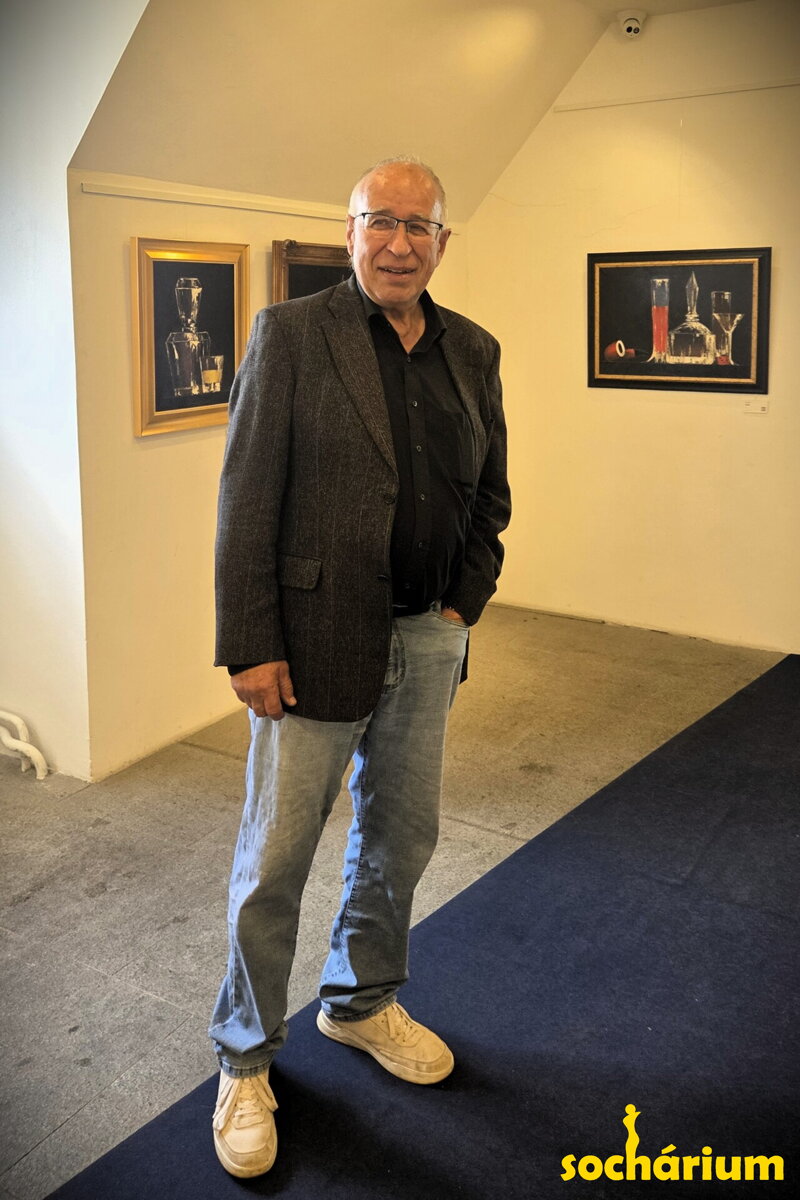


Author’s Statement for the Exhibition:
ELEGANCE EXHIBITION
JAN RAPIN – CONTRA TORRENTEM
"Restraint is the sister of talent," wrote a great man once—and he was more than right. I have tried to follow this principle, though not always consciously. To express what I have in mind, modest means are always enough: a few colors, and content. In this way, I believe I come closer to my colleagues who lived and worked several centuries before me.
Today's era is not particularly favorable to art—especially not to art that deliberately diverges from what is called "modern," which often conceals lack of skill behind offensiveness. "Art does not evolve," claimed one of the great painters of the twentieth century. If it did, artists such as Rembrandt or Rubens would long ago have been forgotten. But they have not. It follows that every new practitioner of painting must measure themselves against these masters. And that is what I strive to do.
From the very beginning, I chose the path of the old masters, regardless of modern "isms," and I have remained faithful to it for half a century. Yes, I was born in the middle of the last century, so today I might even be considered something of a museum piece. I have never followed the path of collective presentation, nor have I seen my future in being shielded by a flock of generational companions.
I try to keep in mind that art should uplift, fulfill, give hope, and emphasize the meaningfulness of life—through beautiful artifacts to which viewers will always wish to return. Drawing from my distinctive style, I also strive to embody the notion of elegance referenced in the exhibition's title.
The time when I rejoiced in every new presentation of my work—whether in Prague, Paris, New York, Rome, Oslo, or Antwerp—is long gone. Exhibitions have multiplied, and I can only hope that my work still has something to offer to perceptive viewers. I wish to bring joy and delight through my paintings, if only because there is already more than enough ugliness in the world.
Unfortunately, I am sometimes perceived by my surroundings as a disruptor of modernity and progressive orders—whether by fellow painters or by bureaucrats. And so we return to the title, which reflects the motto of the House of Salm, one of the oldest and most noble aristocratic families in Europe—a motto I feel I may now, after many years of work, rightfully adopt as my own:
Contra torrentem – against the current.